
I originally started thinking about reading a Greek tragedy when we were reading The Brothers Karamazov two years ago. I realized that novel would have been a struggle for me without an understanding of the Old and New Testament. Since finishing The Brothers Karamazov many of the other books we have read have popped up in films and novels I have been reading on my own. The cultural access I have feels so much bigger from the exposure of our readings and discussions.
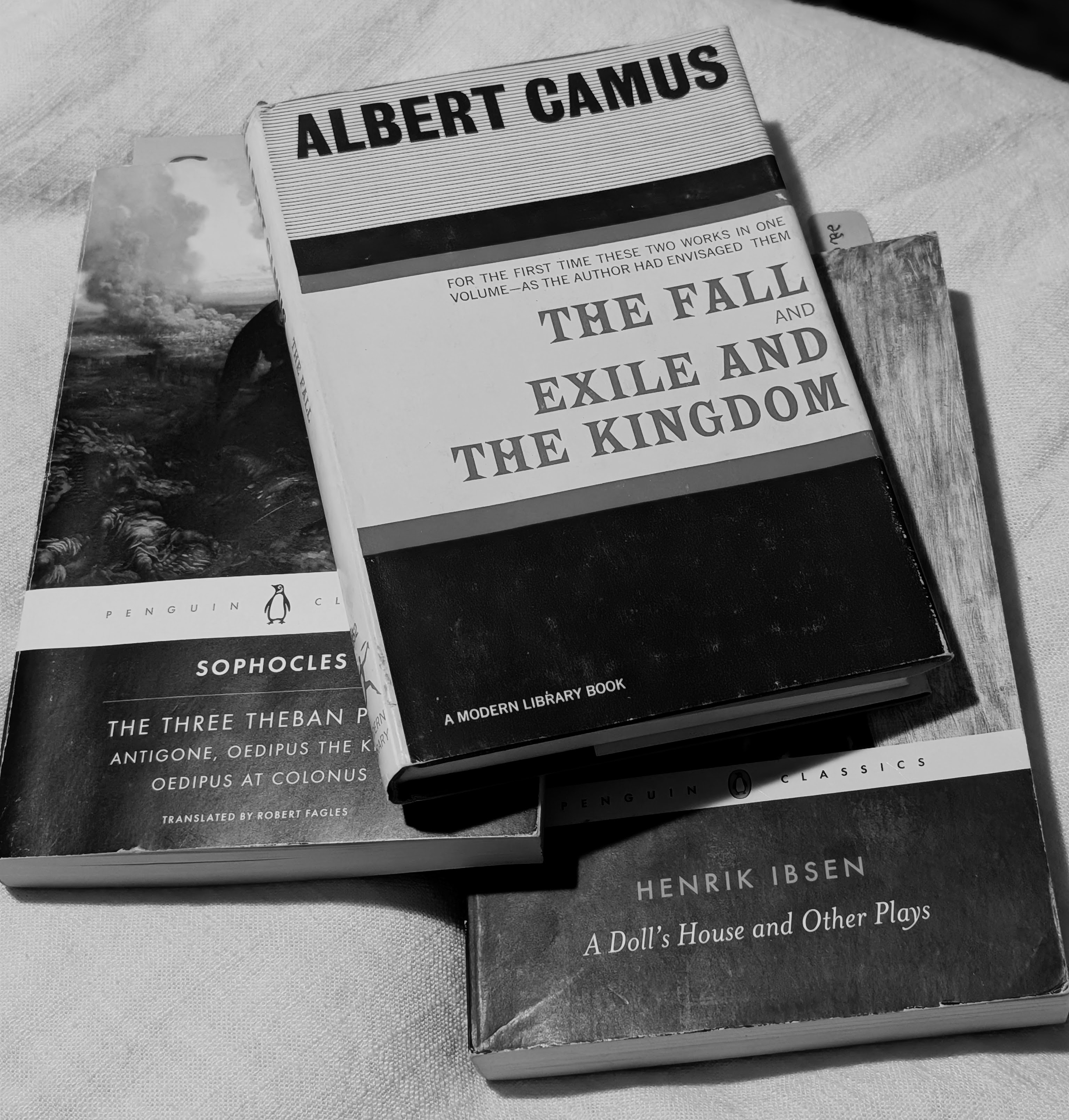
So I think about ancient literature. The Epic of Gilgamesh, The Iliad and the Odyssey are a bit on the tedious and longish side. My first choice would have been The Oresteia, but again a bit long and I didn’t want to wear everyone out. Antigone is short, kind of stands on its own two feet and fit in with The Dolls House as it has a female protagonist.
Funny thing is though, I am not so sure that Antigone is a protagonist.
The Journey Back in Time
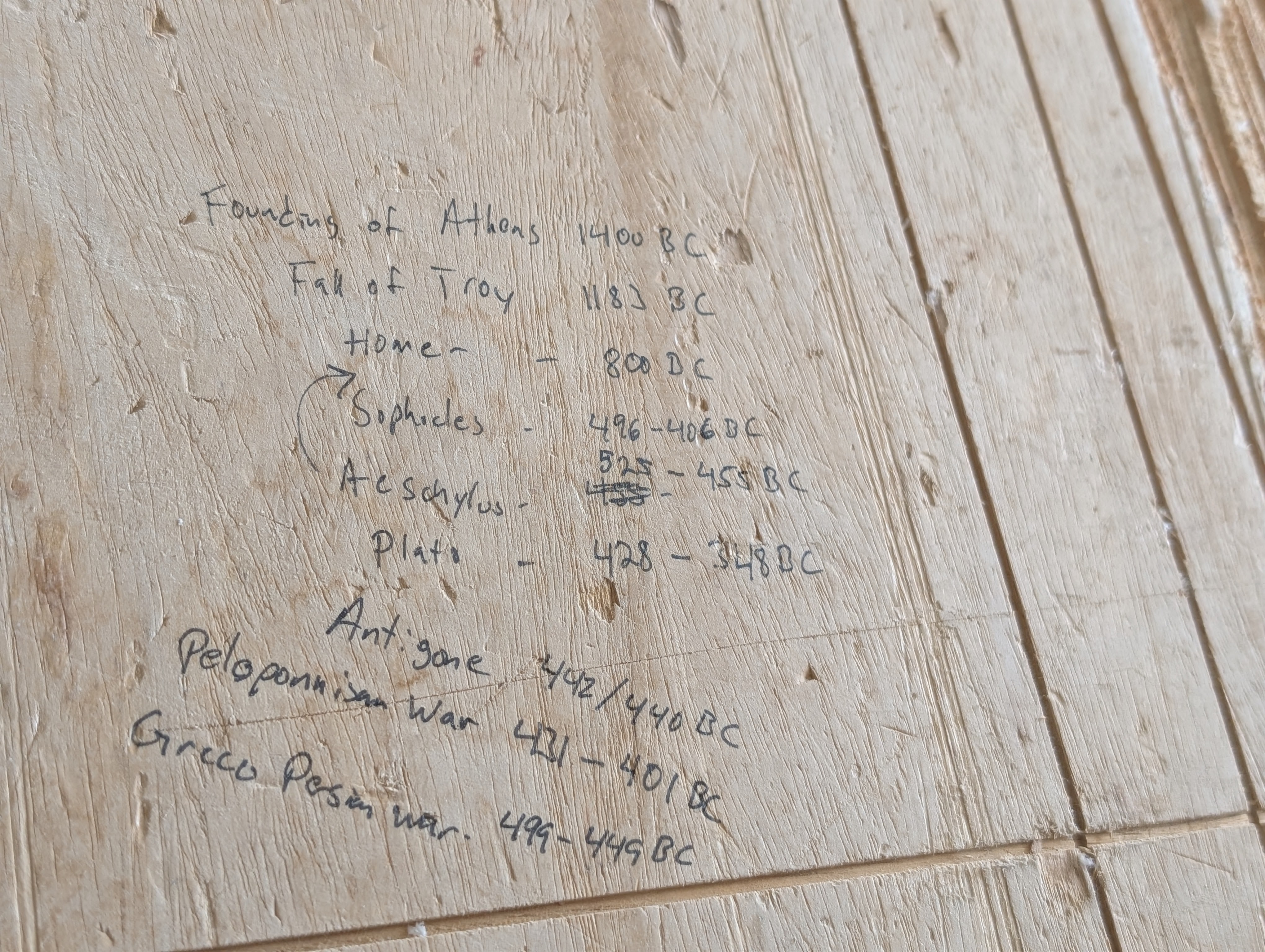
In preparing for our discussion I have enjoyed getting more familiar with this time period in Greece. Athens had recently defeated the massive Persian Army. A young Socrates was prowling the streets of Athens about to drastically alter the course of philosophy. Athens had a few decades earlier instilled democratic reforms altering the civic structure of the city and family relationships. While in Rome at the same time the monarchy was being deposed and a republic instated. In relationship to the Old Testament 800 miles to the east Nehemiah was rebuilding the walls of Jerusalem. It was an exciting time in the Mediterranean.
The play itself is nuanced in its moral judgments. Creon is more of a tragic hero than a villain. He desires to rule firmly a city that has just survived a civil war, and is willing to use corporal punishment to prove his worth. Antigone a benevolent antagonist is living in shame of her family reputation desires to put both of her dead brothers bodies to peaceful rest. Not only the brother who’s death Creon had honored but also the one who Creon has damned, threatening to bring her own death.
What are all these myths that the chorus keep referencing? Who is Danaë? What is a Theban Dragon? How does Oedipus tie in? How would an Athenian in 440BC have felt watching this play? This is my first time wrestling with a Greek chorus and they actually kind of remind me of the Sheriff Bell’s monologues in No Country for Old Men. Reflective on the course of the story.
Conclusion
The way Sophocles wrote the play I can see the merits of both Creon and Antigone’s sides, though the execution of their unwavering convictions has tragic implications. I think that’s what he’s driving at, the dangers of factional thinking. Which really raises Haemon and Ismene to the front of my mind, their tragic and rational pleas for understanding and compromise. The conflicted soldier, barely able to do his job. It’s tempting to highlight how much this story reflects on our times, but I tend to think it reflects on much of the historical human relationship to civic identity and unrest.
Sigh…looking forward to our adventure in West Egg next month, when we discuss The Great Gatsby 🍸

Leave a Reply